Itinerary
A Day at the Longji Rice Terraces, Hour by Hour
Three operators publish a real clock rather than a paragraph, and the shape of the day is the same on all of them: two and a half hours out, five or six on the hill, two and a half back. Here is where each of those hours goes.
In this guide
- What the shape of the day is
- The published timetable, hour by hour
- How early should you leave?
- What happens on the drive
- The morning: gate, village, first platform
- Lunch, and where it happens
- The afternoon: the second platform, and the walk
- When do you get back?
- What does a second day buy you?
- What to have with you on the day
- Which tour shape fits which traveller?
- What does a private day let you add?
- What goes wrong on a Longji day, and how to avoid it
What the shape of the day is
Every Longji day trip from Guilin has the same skeleton, whichever operator runs it. Two and a half hours out, five or six hours on the hill, two and a half hours back. The differences are at the edges: what time you start, whether the gate ticket and lunch are already paid, and which valley you spend those hours in.
What follows is the day as three operators publish it, with the hours they actually allow rather than the ones a brochure implies.
The published timetable, hour by hour
| Time | Join-in coach | Private car |
|---|---|---|
| 07:00 | — | Optional early pickup, if you ask for it |
| 08:30 | Gather at a named Guilin hotel | Hotel pickup |
| 08:45 | Board and set off | On the road |
| 10:00 | On the mountain road | Arriving at the entrance |
| 11:00 | At the ticket office | First platform |
| 13:00 | Walking between villages | Village lunch |
| 14:00 | Village lunch | Second platform, or the second valley |
| 15:00 | The numbered platforms | Still walking |
| 17:30 | Leaving the hill | Leaving, or staying for the light |
| 19:00 | Back in Guilin | Back in Guilin or Yangshuo |
The clock as one operator publishes it for its join-in departure, alongside the shape of a typical private day.
How early should you leave?
Earlier than the coaches, if you can. Fixed departures reach the gate at eleven, which is after the morning cloud has burned off the valley, and they leave at half past five. That is a perfectly good day and it is not the best one available.
A private car will start at seven if you ask when you book. That hour buys you the cloud sitting in the valley, the platforms before the first coach, and light that is coming across the terraces rather than down onto them.
The only way to be higher than the cloud rather than in it is to sleep in a village guesthouse and walk up before breakfast. That is a different trip, and it is the one photographers make.
What happens on the drive
77 kilometres to the entrance, two to two and a half hours. The first hour is ordinary road out of Guilin; the second climbs and turns continuously, which is where the time actually goes. Anyone prone to motion sickness should sit forward and take something before you set off.
Past the entrance you are not there. It is another 17 kilometres up to Ping’an or 23 to Jinkeng Dazhai on a narrow village road. If your vehicle carries ten seats or more you transfer to the scenic-area shuttle at the gate, at CNY 40 per person.
The morning: gate, village, first platform
The ticket office is at the entrance and the queue is short outside holiday weeks. If your fare includes admission you walk through; if not, this is where you pay the CNY 80 and where cash is easiest.
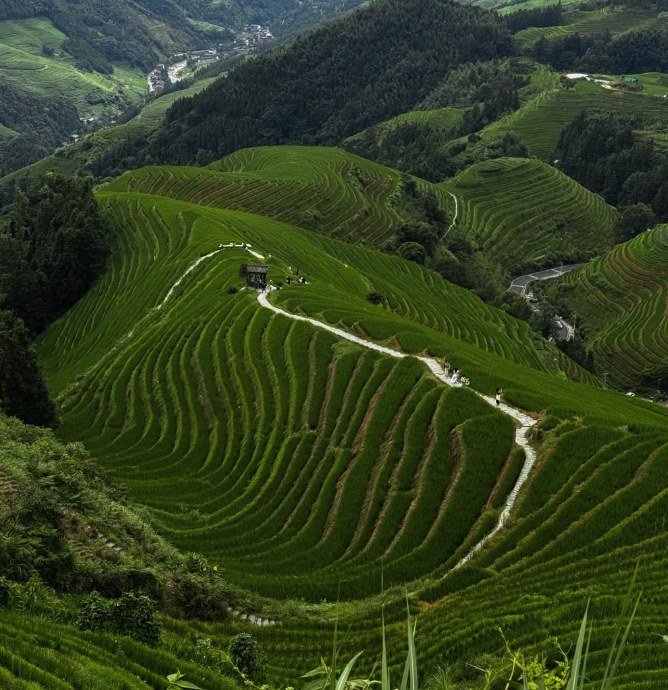
From the village car park the first platform is twenty to thirty minutes of stone steps at Ping’an, or twenty minutes in a cable car at Dazhai. Take the climb slowly: it is the hottest part of a summer day and there is very little shade until you reach the top.
Give yourself an hour at the first platform rather than fifteen minutes. The light moves, the cloud moves, and half the pleasure is watching the valley change while you stand still.
Lunch, and where it happens
Village restaurants sit between the platforms rather than at the top, which is worth knowing if you are walking with children. Bamboo rice is the dish to order — rice cooked inside green cane over a fire, so it takes the scent of the wood — usually alongside smoked pork and a chicken dish.
Some fares include the meal and some do not, and the difference is about ninety minutes of decision-making at the point in the day when you least want to make it. If you are choosing between two otherwise similar tours, this is a fair tiebreaker.
Carry cash. Village restaurants, stalls and the buggy take mobile payment or notes, and foreign cards are rarely accepted past the gate.
The afternoon: the second platform, and the walk
The afternoon is where the tours diverge most. A short day turns round after lunch. A longer one adds the second platform, which is twenty to thirty minutes along the contour at Ping’an, or an hour on the high traverse at Jinkeng.
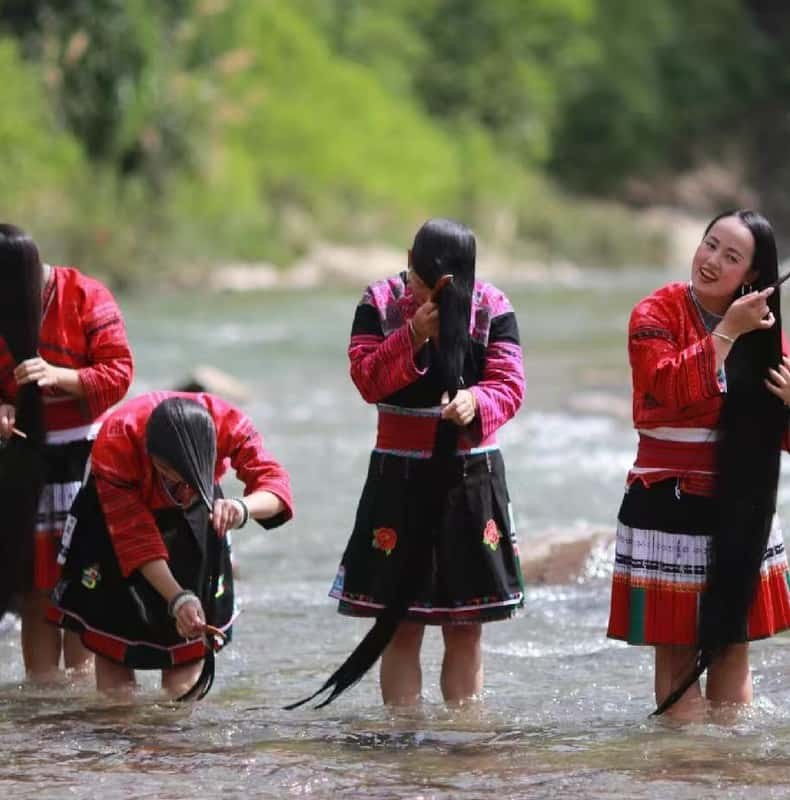
One join-in departure does something better than either: it walks an hour from Guzhuang to Ping’an through the terraces rather than driving round, with the Red Yao long-hair performance en route. That hour is the best walking any fixed departure here puts you on.
When do you get back?
Between five and seven for a day tour, depending on the traffic on the mountain road. The operator who publishes a timetable puts it at 19:00 and says plainly that it moves. Do not book a train the same evening.
If you are staying in the terraces instead, the day ends differently: the lines of the paddies are lit after dark above the villages, which no day visitor ever sees. One tour will drop you at a Longji guesthouse rather than driving you back.
What does a second day buy you?
The other valley, at the other end of the day. Your ticket is already valid for three days, so a second visit costs you a bed and nothing else.
The classic two-day shape is Ping’an in the afternoon of day one, a guesthouse overnight, and Jinkeng at first light on day two. That gets you both valleys, the lit terraces at night, and the cloud sea in the morning — the three things a single day trip cannot deliver.
What to have with you on the day
- Cash in small notes. For the ticket if it is not in your fare, the buggy, and lunch.
- Shoes with a sole. Stone steps, slick after rain. No boots needed.
- A light waterproof. The cloud that makes the photographs is also rain half the time.
- Your passport. Checked at the gate for reduced-price tickets.
- Water. There are stalls at the platforms, but the climb is unshaded.
- An offline map. Signal is good in the villages and patchy behind the ridges.
Which tour shape fits which traveller?
If you want the day decided for you, take a fixed departure: the ticket, the guide and often lunch are already paid, and the timetable is published before you book. If you want the day to bend around you, take a private car, and if there are four of you, price the per-vehicle fares before anything else.
If you want the terraces at first light, no day tour will do it and you should be booking a guesthouse instead. And if you want to know which valley each option actually visits, that is mapped tour by tour on the four villages page.
Whatever you choose, check the exclusions rather than the headline price. A fare that looks $20 cheaper often is not once the CNY 80 gate ticket is added, and the visiting page sets out what that ticket does and does not cover.
What does a private day let you add?
The obvious one is the second valley. One private tour allows two and a half hours at Ping’an and two at Dazhai, which no fixed departure attempts, and the ninety-minute drive from Guilin rather than two and a half is what makes it possible.
The less obvious one is time of day. A private car will collect you at seven, which puts you at the first platform before the coaches and inside the last of the morning cloud. That single hour is the difference between the photographs most people bring home and the ones they wanted.
The third is the ending. One operator will drop you in Yangshuo rather than Guilin for a small extra fee, which saves a whole day of backtracking if that is where you are heading next.
What goes wrong on a Longji day, and how to avoid it
The three that recur are all timing. Arriving at eleven and expecting cloud, which has gone. Allowing two hours on the hill and finding that one of them was the climb. And trying to fit both valleys into a fixed departure that was only ever going to one.
All three are fixed at the booking stage rather than on the day. Start earlier, pick a tour that allows four hours or more at the terraces, and choose your valley before you pay rather than hoping.
Questions this guide gets asked
What time do Longji day tours leave Guilin?
Between 8am and 8:30am on almost every one, which is what the two-and-a-half hour drive dictates. Private cars will start earlier if you ask when you book.
How long am I actually at the terraces?
Between four and six and a half hours on the better tours, and as little as three on the shorter ones. It is the number worth comparing, and it is rarely in the title.
Is there time for lunch?
Yes on every day tour here. Some include it in the fare and the rest leave you to the village restaurants, which sit between the platforms rather than at the top.
Can I get back to Guilin in time for an evening train?
Do not plan on it. Returns run between five and seven and the mountain road is unpredictable. Give yourself the evening.
What if I want to stay overnight instead?
One tour will drop you at your Longji guesthouse at the end of the day rather than driving you back. Your ticket stays valid for three days, so the second valley costs you nothing extra in admission. It is also the only way to be on a platform at sunrise.
Every departure is listed with its hours on the hill on Longji Rice Terraces day tour options.
Tours that fit this trip
Three days built on three different clocks: a published timetable, a private car that starts when you say, and the cheapest fixed departure.