Timing
The Longji Rice Terraces Harvest: Timing the Gold
The gold lasts a few weeks and the exact weeks move with the weather and the altitude. Week by week through the season, plus the three other windows that are worth the drive and cost a third of the crowd.
In this guide
- When is the Longji harvest, exactly?
- Week by week through the season
- Why is the window narrower than the guides say?
- What are the other three windows?
- Is the off-season worth it?
- What is the weather doing?
- What time of day is best?
- How far ahead should you book for the harvest?
- Does the harvest favour one valley?
- Is anything happening besides the harvest?
- Where should you be standing when you get there?
- When do the mirror terraces happen?
- What else changes with the season?
- How would you plan around the season?
When is the Longji harvest, exactly?
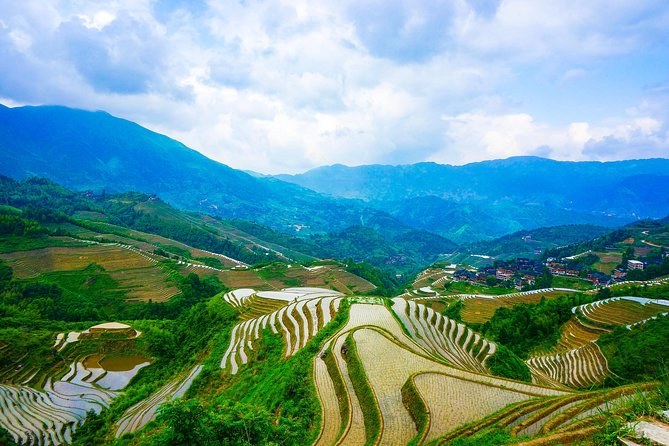
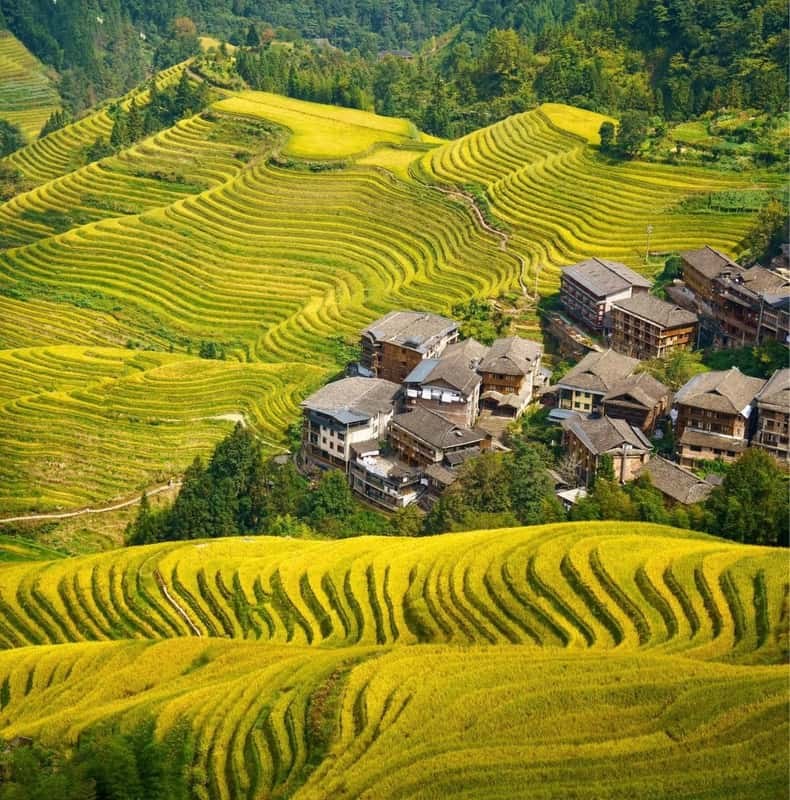
The gold runs from about the middle of September to the first week of November, and the reliable fortnight is the second half of September into early October. That is narrower than the ranges most guides publish, and the reason is altitude.
The paddies sit between 300 and 1,100 metres. Rice ripens from the top of the slope downward over several weeks, and each terrace is cut when it is ready rather than on a date. So there is no single day when the whole hillside is gold, and there is no day when none of it is.
Week by week through the season
| Window | What the fields look like | Crowds | Worth booking for |
|---|---|---|---|
| Late August | Green, with the first yellow on the high terraces | Moderate | Colour without the crowd |
| 1–15 September | Yellowing from the top down | Building | The turn |
| 16–30 September | Full gold on most of the slope | Busy | The best fortnight of the year |
| 1–7 October | Gold, and cutting underway | The busiest week | Avoid if you can — national holiday |
| 8–20 October | Gold and cut side by side | Easing | The colour without the holiday |
| Late October–early November | Mostly cut, stubble and water | Quiet | Low rates, empty platforms |
Windows as published by regional guides and confirmed against one operator’s own seasonal notice. Weather shifts the whole sequence by a few days each year.
Why is the window narrower than the guides say?
Because “September to October” describes when some part of the scenic area is gold, not when the view you have in mind is available. By the second week of October a good deal of Ping’an is cut, and by the end of the month most of it is.
The other compression is the holiday. The first week of October is China’s National Day week and it lands squarely in the best fortnight. One shared trip blacks it out entirely rather than run a compromised day.
Aim for the second half of September, or the week beginning the eighth of October. You get the colour and roughly half the company.
What are the other three windows?
Longji has four distinct looks and the harvest is only the most photographed.
Mid-April to mid-June is the water season. The terraces are flooded for transplanting and hold the sky, which is the mirror effect the region is known for. Late May is the best of it.
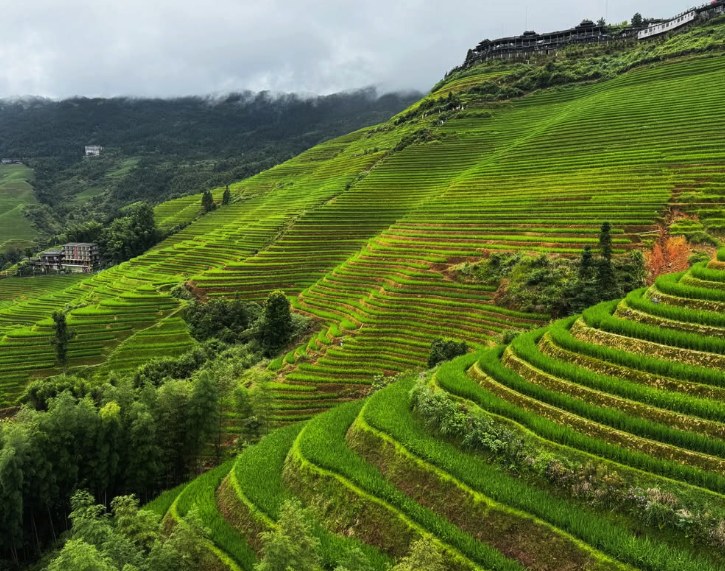
July and August are full green, the rice at its tallest, and the hottest weather of the year at 25 to 32 degrees. Shade is limited on the climb.
November to March is the off-season: no rice, water in every terrace, cloud in the valleys most mornings, and snow on the high ridges some years. It is the quietest season by a wide margin.
Is the off-season worth it?
One operator answers this in writing to its own buyers, which is a fair way to handle it: from early November to late March there are no golden fields, and there are mirror terraces instead. Nothing is hidden and nothing is oversold.
What you actually get is water, quiet and cloud. The platforms are close to empty, guesthouse rates fall, and the flooded paddies reflect the sky the same way they do in spring. For photographers who want the terraces without other photographers in them, it is the best time of year.
The trade is daylight. December days are short, so a Guilin day trip is tight and an overnight makes more sense.
What is the weather doing?
Warm and wet in summer, cool and damp in winter, with cloud in the valleys most mornings all year. June is the wettest month; July and August are the hottest at 25 to 32 degrees; January sits at 5 to 10 with snow possible on the high ridges.
Rain is not the problem people expect it to be. The terraces are worth seeing wet, cloud is half of what makes the photographs, and the stone steps are simply slower. Bring a light waterproof and shoes with grip.
What time of day is best?
Early, and it is not close. Cloud settles into the valleys overnight and burns off from the top down through the morning, so the half hour after sunrise from a high platform puts you above it looking across the top.
That is only available if you sleep in a village guesthouse, because the fixed departures reach the gate at eleven by design. A private car with a seven o’clock start is the compromise and it gets you most of the way there.
Mid-afternoon is the second-best light and the easiest to reach. Late afternoon in autumn is the warmest colour of the day, and it is when the coaches have gone.
How far ahead should you book for the harvest?
A week or more from mid-September, and further if your dates are fixed. One operator reports its private days running about seven weeks ahead on average, which is the clearest signal available on how tight the season gets.
Guesthouses in the villages fill before the tours do, so if you are staying overnight that is the booking to make first. Every tour here refunds in full up to 24 hours ahead, so booking early costs nothing and protects the departure you want.
Does the harvest favour one valley?
Slightly, and it favours Jinkeng Dazhai. The bowl is bigger, the terraces run higher, and the staggered ripening is more visible across a larger slope — cut, gold and green all in one frame.
Ping’an is the tighter composition and the more crowded one in harvest weeks. If you are going in late September and you have the choice, the extra six kilometres to Dazhai buys you a noticeably calmer day.
Is anything happening besides the harvest?
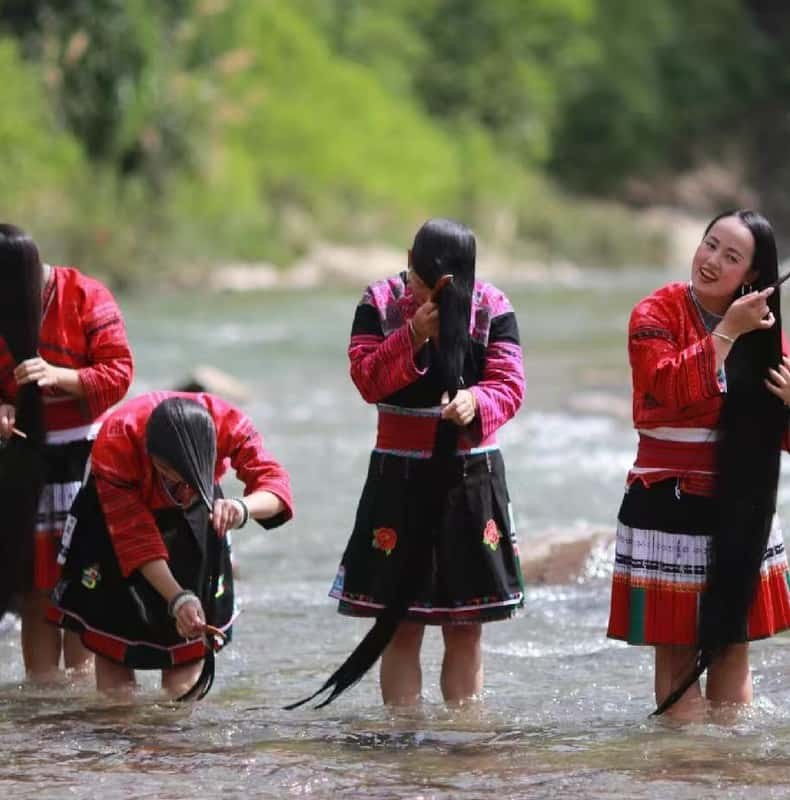
Yes, though none of it is a fixed date you can plan a flight around. Rice-drying and clothes-airing festivals happen in the villages through the autumn, and the Red Yao long-hair festival at Huangluo draws the crowd that set the Guinness record there in April 2023.
The staged long-hair performance runs year round and is ticketed separately at about CNY 80. One day tour includes it in the fare.
Where should you be standing when you get there?
In harvest weeks the answer is usually higher than you planned. The gold arrives at the top of the slope first, so the upper platforms hold colour for longer, and West Hill Music at about 1,180 metres is the last place to lose it.
At Ping’an the two platforms face differently enough to matter: Nine Dragons and Five Tigers gives you the long ridge, and Seven Stars with the Moon gives you the curve. In a cut-and-uncut fortnight, one of the two will be noticeably better than the other on any given day, and it is worth asking your guide which.
All five platforms, with the climb to each, are set out on things to do at the terraces, and the valleys themselves on the four villages page.
When do the mirror terraces happen?
The mirror terraces happen twice a year, and the two are not the same. From mid-April to mid-June the fields are flooded for transplanting, and the young rice shows through the water as it grows, which is the version most photographs show. Late May is the peak of it.
Through the winter the paddies refill and hold water bare, with no rice in them at all. The reflections are cleaner and the platforms are close to empty, which is why some photographers prefer January to May.
Both are covered month by month on the best time to visit.
What else changes with the season?
More than the colour. Guesthouse rates in the villages rise through the harvest and fall sharply from November, often by half. The buses run the same timetable all year but fill in the holiday weeks, and the village restaurants keep longer hours in the seasons that bring people.
Daylight is the other variable, and it is easy to overlook. A December day gives you roughly ten hours of usable light against fourteen in June, which is the difference between a comfortable day trip and a rushed one on a road that takes two and a half hours each way.
Nothing closes seasonally. The scenic area is open all day, every day, and the ropeway and shuttles run year round.
How would you plan around the season?
- Pick your window first. Water in late May, gold in late September, quiet from November.
- Avoid the three holiday weeks. Chinese New Year, 1–5 May and 1–7 October.
- Book the guesthouse before the tour if you want sunrise.
- Choose Dazhai in harvest weeks for the calmer version.
- Keep the 24-hour cancellation as your weather insurance.
Questions this guide gets asked
When exactly is the Longji Rice Terraces harvest?
Mid-September to early November, with the reliable fortnight from about the 16th of September. The paddies ripen from the top of the slope downward, so cut and uncut fields sit side by side for weeks.
Is October too late for the gold?
The second week is good and the colour holds to about the twentieth. Avoid the first week, which is a national holiday and the busiest of the year.
What if I can only travel in winter?
Come anyway. The paddies fill with water and mirror the sky, the platforms are close to empty and rates drop. There is no rice, and one operator says so to its buyers in writing rather than letting you find out.
When are the flooded mirror terraces?
Mid-April to mid-June, with late May the best of it, and again through the winter once the fields refill. They are two different looks: young green shoots in spring, bare water in winter.
Does the weather cancel tours?
Rarely. They run in rain, and the cloud is part of what people come for. If a forecast changes your mind, cancel free up to 24 hours before departure.
Every departure and what it covers is on Longji Rice Terraces Tours.
Tours that fit this trip
Three days that suit the season: an all-in autumn coach, a small-group hike and the cheapest fixed departure.