Visitor guide
The Complete Longji Rice Terraces Visitor Guide
What you are going to see
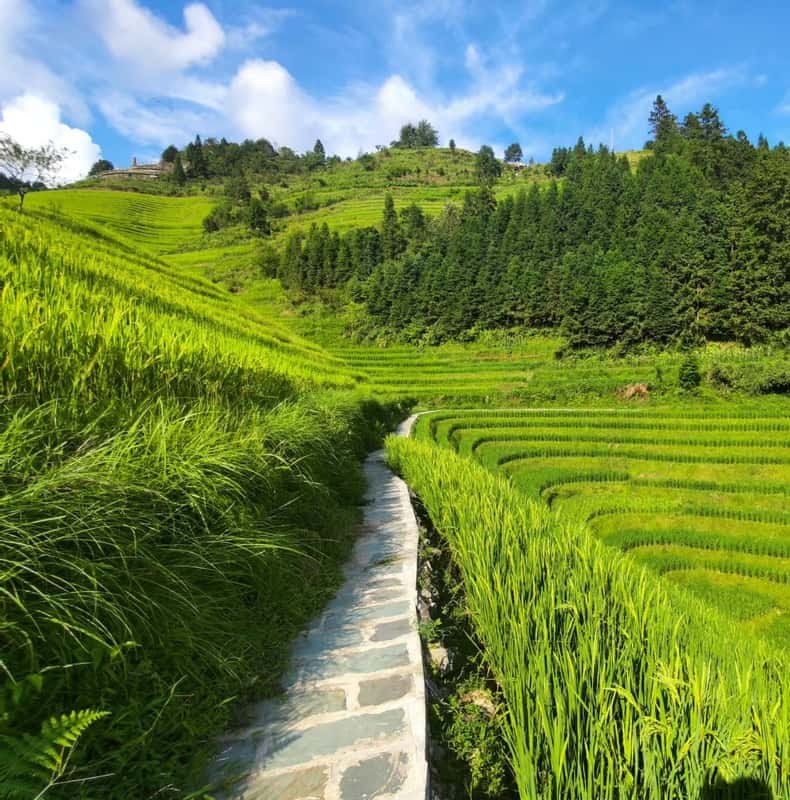
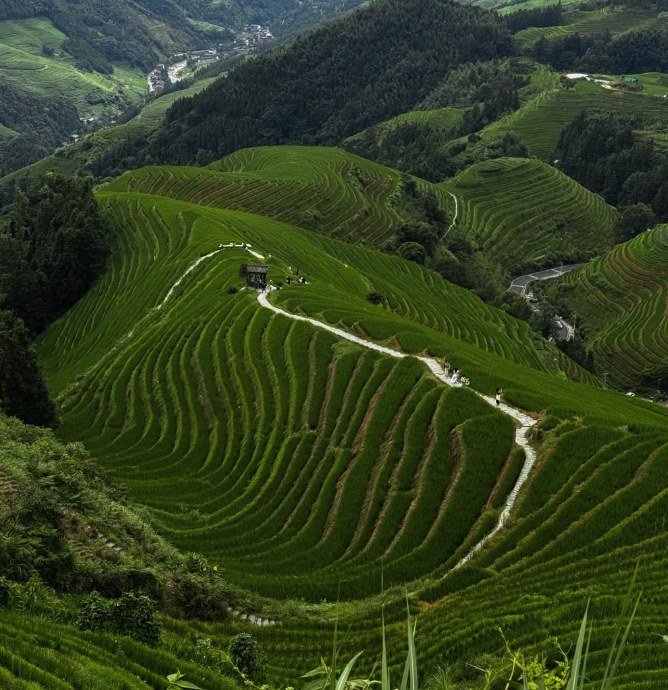
Longji is 1,174 hectares of terraced rice paddy cut into a mountain ridge in Longsheng County, northern Guangxi. The fields run from 300 metres up to 1,100, and because they follow the contour rather than the slope, a single paddy can curve through most of a semicircle with its water level all the way round.
It is a working farm, not a monument. Zhuang and Yao families cut these terraces from the Yuan dynasty into the early Qing and still crop them, which is why adjacent fields hold different amounts of water and why the harvest happens over weeks. The background is set out in full on what the Longji Rice Terraces are.
Getting there from Guilin
You have three realistic options and they cost very different amounts of your day. Buses leave Guilin Qintan Bus Station from about 06:25 to 18:10, take around an hour and a half to the junction, and cost somewhere between CNY 50 and 60 depending on the service.
A private car and driver takes you door to door in two to two and a half hours, and two of the fares here are priced by the vehicle rather than per head. A guided day tour does the same and adds somebody who knows which path goes where. The three are compared properly on getting to the terraces.
What the ticket costs and what it covers
| Item | Cost | In the gate ticket? |
|---|---|---|
| Scenic-area admission, adult | CNY 80 | Yes — and valid three days |
| Admission, 60–64 or student under 18 | CNY 40 | Yes |
| Admission, 65 and over, or under 1.2 m | Free | Yes |
| Scenic-area shuttle bus | CNY 40 | No — compulsory for vehicles of 10+ seats |
| Electric buggy, Ping’an | CNY 30 one way, CNY 50 return | No |
| Dazhai ropeway | Paid at the station | No |
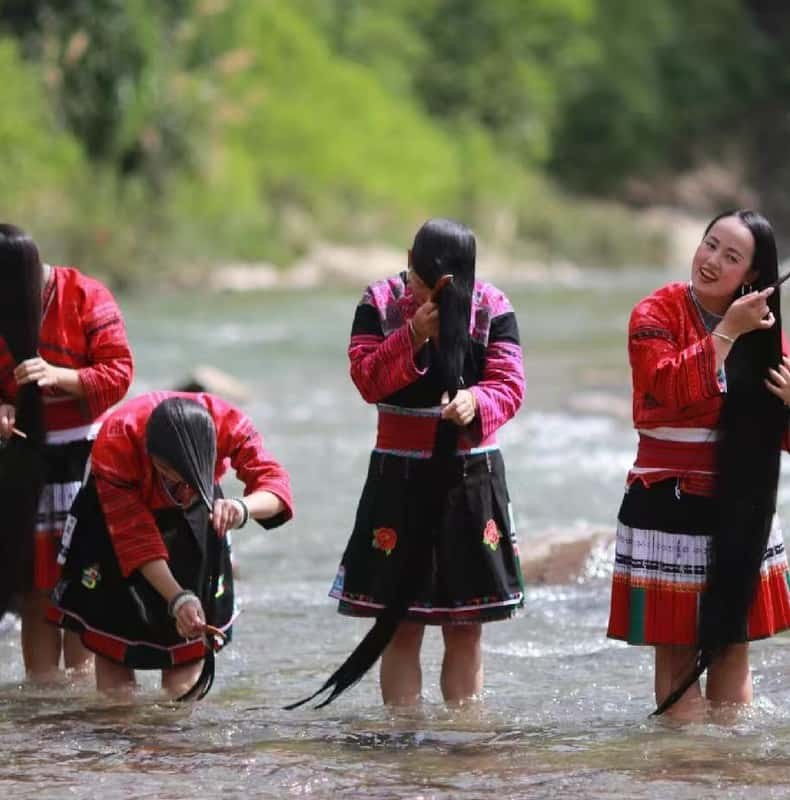
| Long-hair performance, Huangluo | about CNY 80 | No |
Admission from the scenic area’s published tariff, checked August 2026. Extras as quoted by operator listings.
Booking sites that show CNY 95 or CNY 100 are bundling the shuttle into the figure rather than charging more for the same entry. The gate price is CNY 80. The full breakdown, including who pays which extra, is on the visiting page.
Ping’an or Jinkeng Dazhai
This is the decision that shapes your day, and most tours make it for you without saying so in the title. Ping’an is 17 kilometres past the entrance: a Zhuang village on a shoulder, two numbered platforms above it, twenty to thirty minutes of stone steps to the first.
Jinkeng Dazhai is 23 kilometres in and higher. The bowl is larger, the platforms are three rather than two, and a ropeway runs to the top so the climb is optional. It is quieter at every hour of the day.
One ticket covers both, so the constraint is time rather than money. Which villages each tour actually visits is mapped out on the four villages page.
How long you need
- Two hours on the hill. One platform and a look. Fine if you are passing.
- Four to six hours. One valley done properly: the climb, both platforms, a village lunch. This is what the better day tours allow.
- A full day plus. Both valleys, which needs a private car or a very early start.
- Two days. One valley each, with a night in a village guesthouse between them. Your three-day ticket already covers it.
When to go
Four seasons, four completely different hillsides. Mid-April to mid-June the paddies are flooded and hold the sky. July and August they are green. Mid-September to early November they turn gold, which is the shortest window and the busiest.
From November to March there is no rice, and the fields fill with water again and mirror the sky, with snow on the high ridges some years. It is the quietest season by a wide margin. Month by month, it is all on the best time to visit.
What to bring, and what to wear
Trainers or light walking shoes with a real sole. The paths are dry stone steps and narrow field bunds — steady rather than rough, with no scrambling anywhere — but they are slick after rain and the descent is the part that catches people out.
Bring cash. Village restaurants, buggies and stalls run on mobile payment or notes, and foreign cards are rarely accepted past the gate. Bring your passport too: the scenic area checks documents for reduced-price tickets.
Eating on the hill
Village lunches are built around bamboo rice, cooked inside a length of green cane over a fire so it takes the scent of the wood, usually with smoked pork and a chicken dish. Some tours include the meal in the fare and the rest leave you to the restaurants along the path.
The local drink is oil tea: tea leaves fried with ginger and salt, pounded in a wooden trough, and served with puffed rice and peanuts. One day tour is built around making it with a village family, which is covered under things to do at the terraces.
The five practical answers
- Do I need a visa? Possibly not — 45 countries have 30-day visa-free entry to China until the end of 2026, with the UK and Canada added in February 2026.
- Is there signal? Good in the villages, patchy behind the ridges. Download an offline map.
- Are there toilets? At the village gates, the platforms and the restaurants.
- What if it rains? The tours run, and cloud in the valley is half of what photographers come for. Every tour here refunds in full at 24 hours.
- Can I stay overnight? Yes, and the terrace lines are lit after dark, which no day visitor sees.
Everything else a first visit raises is answered on the questions page, and every bookable way up is listed on Longji Rice Terraces tours.
Tours that fit this trip
A first visit needs the ticket, the drive and a guide who knows the paths. These three cover all of it between them.