With children
Longji Rice Terraces With Kids: What Works and What Doesn’t
The honest difficulty: the drive, not the hill
Parents tend to worry about the climb and then find that the mountain road is the hard part. It is 77 kilometres from Guilin to the gate and the last hour turns constantly, which is a lot for a small child before the day has started.
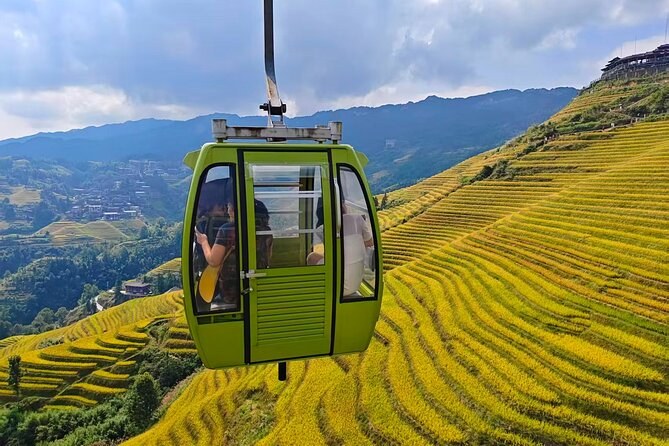
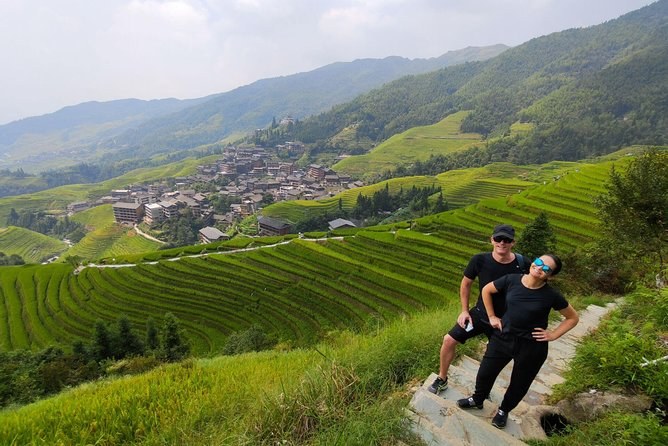
The walking is more manageable than it looks. The paths are dry stone steps rather than trails, there is no scrambling, and both of the mechanical shortcuts drop the climbing to almost nothing.
Two ways to remove the climb
| Shortcut | Where | Cost | What it saves |
|---|---|---|---|
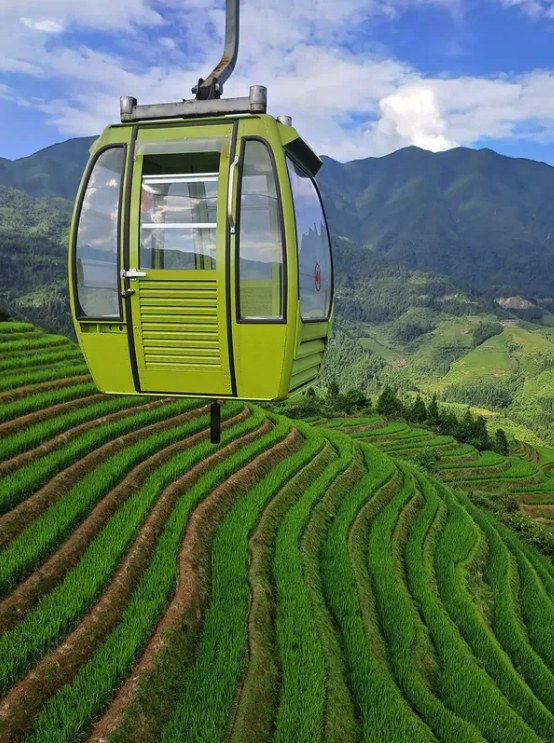
| Ropeway | Dazhai, up to Golden Buddha Peak | Paid at the station; one day tour includes the return | About 1 hr 30 of climbing |
| Electric buggy | Ping’an village gate towards the platforms | CNY 30 one way, CNY 50 return | About 30 minutes of steps |
| Neither | Either valley | Free | — |
The ropeway is the bigger saving and lands you somewhere level. The buggy is cheaper and still leaves the good part of the walk.
What the listings actually say about children
- Infant seats are available on one private day tour, which is the only one here that names them.
- Stroller accessible is stated on the Dazhai cable-car day tour, and on nothing else.
- Children must be accompanied by an adult appears on several listings, which is the usual formula rather than a restriction.
- Infants must sit on laps is stated on four of the day tours.
- Not wheelchair accessible is stated on almost all of them, and it applies to a pushchair on the upper paths too.
Which tour carries which is easiest to see on the tour and village table, and the accessibility position in full is on the visiting page.
Pick a tour with lunch in the fare
This matters more with children than without. Village restaurants are good but they are along the path rather than at the top, and finding one with a hungry child after an hour of steps is the wrong order of events.
Several of the day tours include a village lunch, usually built around bamboo rice cooked in green cane over a fire — which is, incidentally, the dish most children here actually eat. One of them also includes the long-hair performance, which is fifteen minutes of something happening rather than another view.
How to shape the day
- Leave early and accept the nap. The road out is when a young child will sleep, and that is fine.
- Choose Dazhai if they are small. The ropeway makes it the shorter day in effort even though it is the longer one in distance.
- Choose Ping’an if they will walk. Two platforms, a village between them, and a buggy in reserve.
- Book the lunch. One less decision at the moment it is hardest to make.
- Bring cash and tissue. Toilets are at the gates and platforms; neither takes cards.
What holds their attention
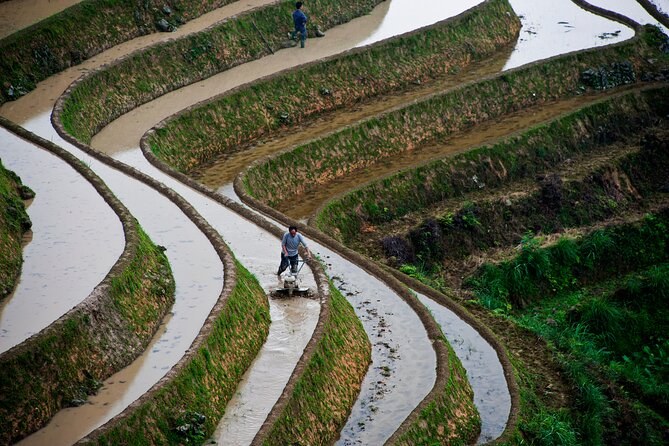
The ropeway, first and reliably. After that: the buffalo working the lower fields, the timber stilt houses with their granaries raised off the ground, and the water — every terrace is a shallow pond for half the year, and the reflections change as you walk.
Making oil tea is the one hands-on thing available: roasting peanuts and soybeans, grinding them in a wooden trough and pouring hot water over the paste. One day tour is built around it. It is described under things to do at the terraces.
The questions parents ask that a listing will not answer
Will they be bored in the car? Probably, for part of it. You have two and a half hours each way and the last hour is switchbacks, so download something before you leave Guilin and accept that the outward leg is nap time. A private car helps here more than anything else, because you can stop when you need to.
Is there anything to do other than look? Yes, and it is worth choosing for. The ropeway is an event in itself. The oil-tea workshop gives them something to make with their hands. The long-hair performance at Huangluo is fifteen minutes of something happening. A day built from those three is a very different proposition from a day built from two viewpoints.
Ages, honestly
Under three is hard, mostly because of the road rather than the hill, and a carrier beats a pushchair everywhere above the village gate. Three to six works well if you take the ropeway and keep the walking short. Seven upwards and you can do a proper Ping’an day, both platforms included, with a buggy in reserve for the way back.
Teenagers do best at Jinkeng, where the walking is real and the traverse between platforms feels like a hike rather than a stroll. If you have one who will walk, that is the valley to choose and it is compared with the other on the Ping’an and Dazhai guide.
What to pack that you would not otherwise
Cash, in small notes, because the buggy and the village restaurants take nothing else. Tissue, because the toilets do not always provide it. A carrier rather than a pushchair if your child is small enough to need one, since nothing above the village gate is wheeled.
Beyond that it is the usual: shoes with a sole, a light waterproof, and more water than you think for a summer visit. There are stalls at the platforms, so you do not need to carry a day’s worth up the hill with you.
Which season is easiest
Late September and October for the gold, but expect company. May for the flooded fields and warm weather without August’s heat. Avoid full July and August with young children if you can — 32 degrees on an unshaded stone stairway is the one genuinely hard combination, and it is set out month by month on the best time to visit.
Every option, with what each fare covers, is on Longji Rice Terraces Tours.
Tours that fit this trip
A ropeway, a private car and a lunch already paid for. These three remove the three things that make a family day hard here.